
How Politics, Government Policies, and Elections Affect Independent Filmmakers, Black-Owned Production Companies, and Independent Artists
By CINO | CINO Press Media (CPM)
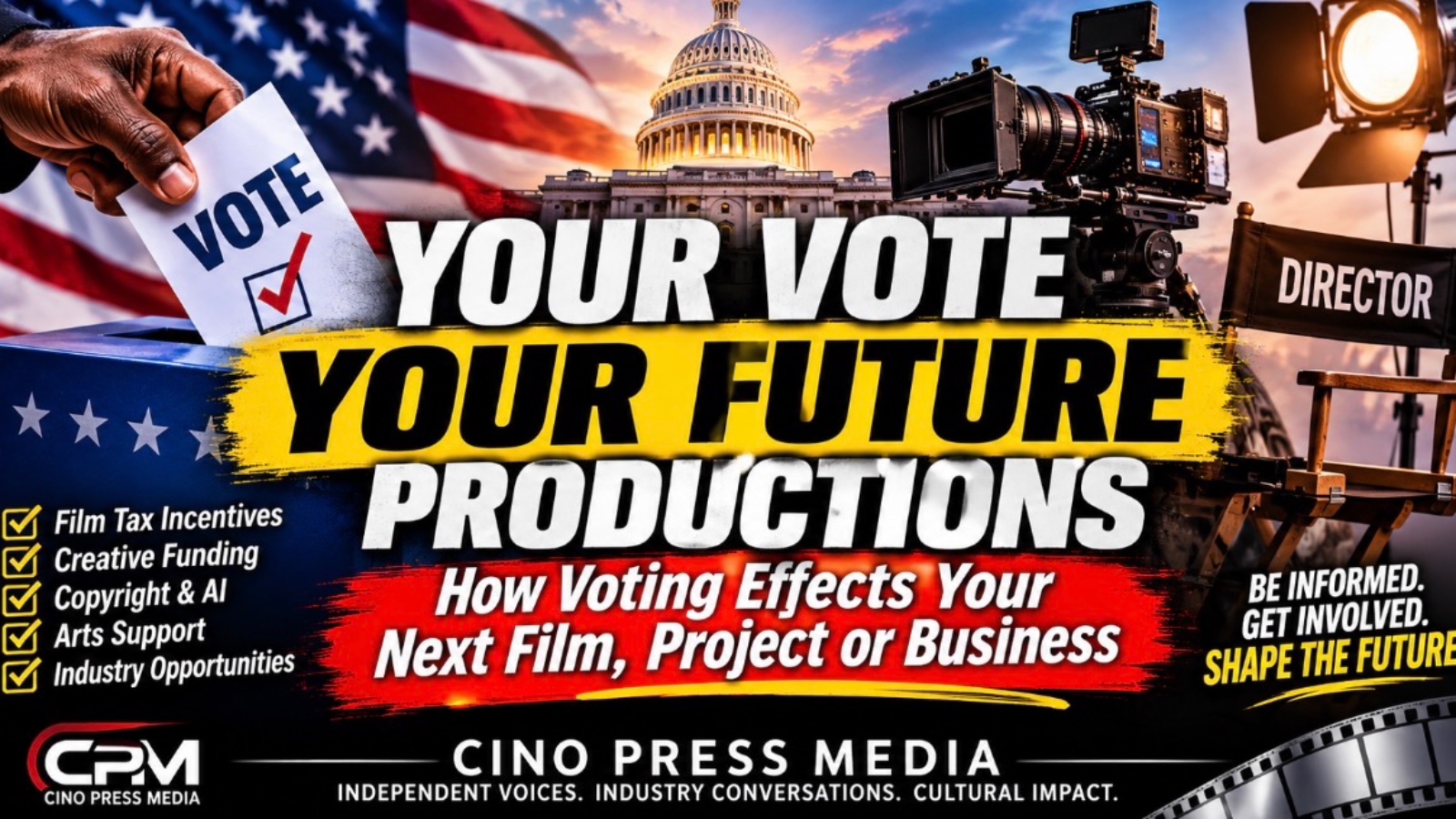
There is a conversation that independent filmmakers, actors, screenwriters, musicians, producers, and creative entrepreneurs need to start having: What does voting have to do with the entertainment industry?
The answer is simple: A lot more than most people realize.
Many creatives view voting as something separate from their careers. They see politics as Washington business, something for politicians, lobbyists, and people who work in government. But the reality is that government decisions influence the very industries we depend on to create, produce, distribute, and monetize our work.
Whether you’re an independent filmmaker trying to finance your next feature, an actor looking for consistent opportunities, a screenwriter protecting an original script, or a music artist trying to build an independent brand, policies matter.
Your vote can help shape the economic environment in which your creativity has to survive.
HOLLYWOOD IS A BUSINESS. SO IS INDEPENDENT FILMMAKING.
The entertainment industry operates within an economic system influenced by government policy.
Film production tax incentives, business regulations, labor laws, intellectual property protections, arts funding, and small-business programs can all affect whether a production gets financed, where it gets made, and how many people it can employ.
Large studios often have established relationships, substantial resources, and teams dedicated to navigating these systems.
Independent filmmakers don’t always have those advantages.
For emerging production companies, a tax incentive or accessible grant program could make the difference between producing a film and leaving a project sitting on a shelf.
This is why independent creatives should pay attention to who represents them at the local, state, and federal levels.
THE IMPORTANCE OF FILM TAX INCENTIVES
Film tax incentives are one of the most important economic tools affecting production.
States compete to attract film and television productions by offering financial incentives to companies that spend money locally.
These programs can bring employment to actors, camera operators, production assistants, editors, sound technicians, caterers, transportation providers, and countless other professionals.
But here’s the question independent filmmakers should be asking:
Are these incentives creating opportunities for independent production companies, or are the biggest players receiving most of the benefits?
Independent filmmakers should advocate for programs that make room for smaller productions, emerging directors, minority-owned production companies, and local creative businesses.
The goal shouldn’t simply be to bring Hollywood into a city. The goal should be to develop an ecosystem where local filmmakers can build sustainable careers.
BLACK-OWNED PRODUCTION COMPANIES NEED A SEAT AT THE TABLE
Representation goes beyond seeing ourselves on screen.
It also means ownership, financing, distribution, employment, and decision-making power.
Black filmmakers and independent artists have historically built opportunities through community networks, personal investments, independent distribution, and creative partnerships.
But talent alone cannot solve every economic obstacle.
Access to capital, business development resources, production infrastructure, and distribution opportunities matters.
We need policies and programs that support the development of Black-owned production companies and independent creative businesses—not just temporary opportunities, but long-term economic growth.
The question is not whether Black stories deserve to be told.
The question is whether the people creating those stories have the resources and ownership opportunities to build lasting businesses around them.
COPYRIGHT, ARTIFICIAL INTELLIGENCE, AND CREATIVE OWNERSHIP
Another major issue facing the entertainment industry is artificial intelligence.
As technology changes how films, music, images, and performances are created, artists need meaningful protections.
Who owns an original screenplay?
Can someone’s voice or likeness be replicated without permission?
How should performers be compensated when their digital likeness is used?
What protections exist for independent musicians and filmmakers whose original work is used to train artificial intelligence systems?
These are not distant questions. They are issues that affect the future of creative ownership.
Independent artists should pay attention to legislation involving copyright, digital likenesses, intellectual property, and consent.
If we don’t protect the value of original creativity, we risk creating an industry where the people generating the culture have less control over the products of their own imagination.
LOCAL POLITICS CAN AFFECT YOUR NEXT PRODUCTION
Federal elections matter, but local elections matter too.
City councils, county officials, state legislators, and local economic development agencies can influence:
Film permitting and production fees.
Access to public filming locations.
Local arts and cultural funding.
Small-business development programs.
Creative workforce training.
Production infrastructure and studio development.
Local employment opportunities.
Imagine a city that actively invests in independent filmmaking, provides accessible production spaces, supports local festivals, and creates incentives for small production companies.
That city could become a destination for independent creators.
But that kind of environment requires leadership, investment, and public participation.
STOP WAITING FOR HOLLYWOOD TO OPEN THE DOOR
Independent filmmaking has always been about creating opportunities when traditional systems don’t provide them.
We write our own scripts. We assemble our own casts. We build our own production teams. We find locations, raise money, create partnerships, and figure out distribution.
That entrepreneurial spirit is what keeps independent film alive.
But independence doesn’t mean isolation.
We need to understand the systems around us, develop relationships, participate in local government conversations, and advocate for policies that support the creative economy.
Voting is one way to participate.
It doesn’t guarantee that a particular candidate will support your industry, and no election can solve every problem. That’s why creatives should research candidates, examine their records, understand ballot measures, and hold elected officials accountable.
Don’t vote based solely on a campaign slogan. Vote with an understanding of how decisions affect your livelihood and your community.
THE FINAL FRAME: YOUR VOICE MATTERS BEHIND THE CAMERA TOO
At CINO Press Media, we believe the conversation about independent film must extend beyond premieres, celebrity interviews, entertainment headlines, and box-office numbers.
We must also discuss ownership, opportunity, economics, legislation, and the future of creative independence.
The next generation of filmmakers shouldn’t have to depend entirely on someone else’s permission to tell their stories.
We need independent production companies that can create jobs, develop talent, own intellectual property, build distribution relationships, and contribute to the communities they represent.
That requires more than creativity. It requires business knowledge, collaboration, advocacy, and participation.
So, the next time Election Day comes around, remember that your vote reaches beyond the ballot box.
It can influence the environment in which your next film is produced, your next business is built, and your next creative opportunity is developed.
Your vote is your voice. Your creativity is your currency. Your ownership is your legacy.
Don’t just participate in the culture. Help shape the future of the industry.
CINO PRESS MEDIA (CPM)
Independent Voices. Industry Conversations. Cultural Impact.