
I find it interesting how much people talk about Tubi—what it’s doing, what it’s producing, who’s getting opportunities, what kinds of stories are being told—and somehow I feel like we’re missing a bigger point.
When I hear those conversations, I look at Tubi from a different perspective.
Tubi wasn’t around when I was coming up.
But you know what was?
Some young, talented brothas pushing independent film forward.
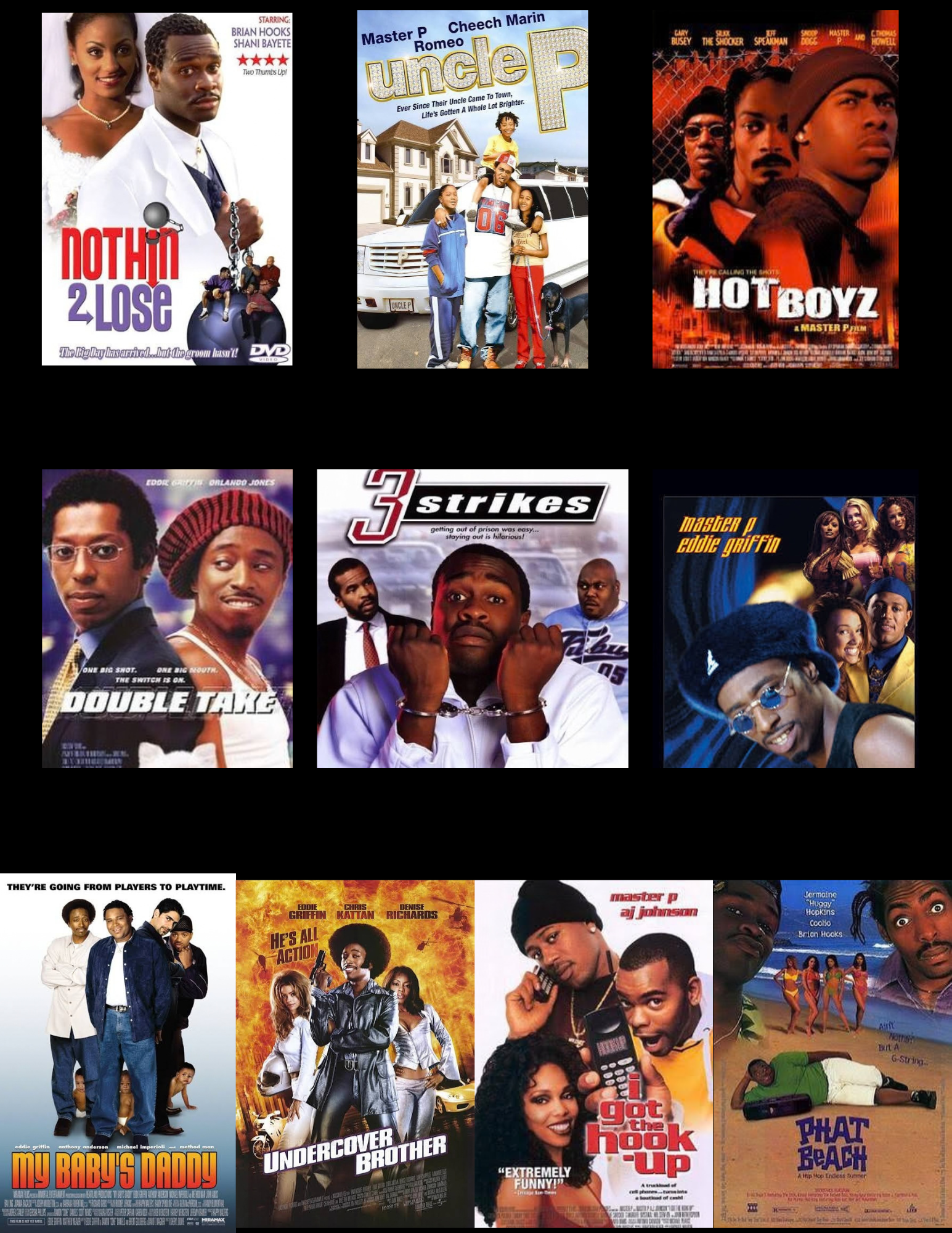
Master P. | Brian Hooks. | Eddie Griffin.
Those were some of the people I looked at and thought, Man, you can really do this.
When you saw their movies, you were locked in. The culture was talking about them. The community was repeating the lines, copying the lingo, quoting scenes, and making those movies part of everyday conversation.
I still randomly blurt out a line or two during the week just to see who still remembers.
That’s how you know something had an impact.
It wasn’t just a movie.
It became culture.
which I feel Tubi represents today for independent filmmakers, especially Black independent filmmakers, I see a lot of the same ingredients that made those earlier movies connect with us:
Real stories.
Creativity.
Personality.
Originality.
Opportunity.
Community.
And that’s why, in my mind, Tubi feels familiar.
Not because Tubi literally is Master P, Brian Hooks, or Eddie Griffin.
But because I’ve seen this spirit before.
Your personality is part of the product.
Don’t be afraid of what makes your work different.
That’s often the thing people remember.
These Weren’t Just Movies
That’s the bigger point I think gets missed.
These weren’t just movies.
They were examples.
They were proof of concept.
They showed people watching that independent filmmaking wasn’t only about having a massive budget or getting a studio to approve your idea.
It was about having a voice.
Understanding your audience.
Having something to say.
And being willing to put something out.
And honestly?
Sometimes the formula was as simple as:
A camera.
An idea.
Some people willing to show up.
And the courage to actually make it.
Then you learn.
You make mistakes.
You make another one.
You get better.
You build relationships.
You figure out your audience.
You figure out distribution.
You keep creating.
That’s the game.
That was the blueprint.
— CINO Press Media